Jun 17 – 24

The Weekly Digest

A handful of pieces pulled from across the index — one from each publication, ranked for substance over noise.

01
More Than Just Parks·Jun 23·conservation

Inside Trump’s Secret War on America’s Hunters & Anglers

An investigative feature examining policy decisions affecting wildlife migration patterns, told through the story of a mule deer doe's annual journey. The piece blends personal narrative with advocacy reporting on federal land management.

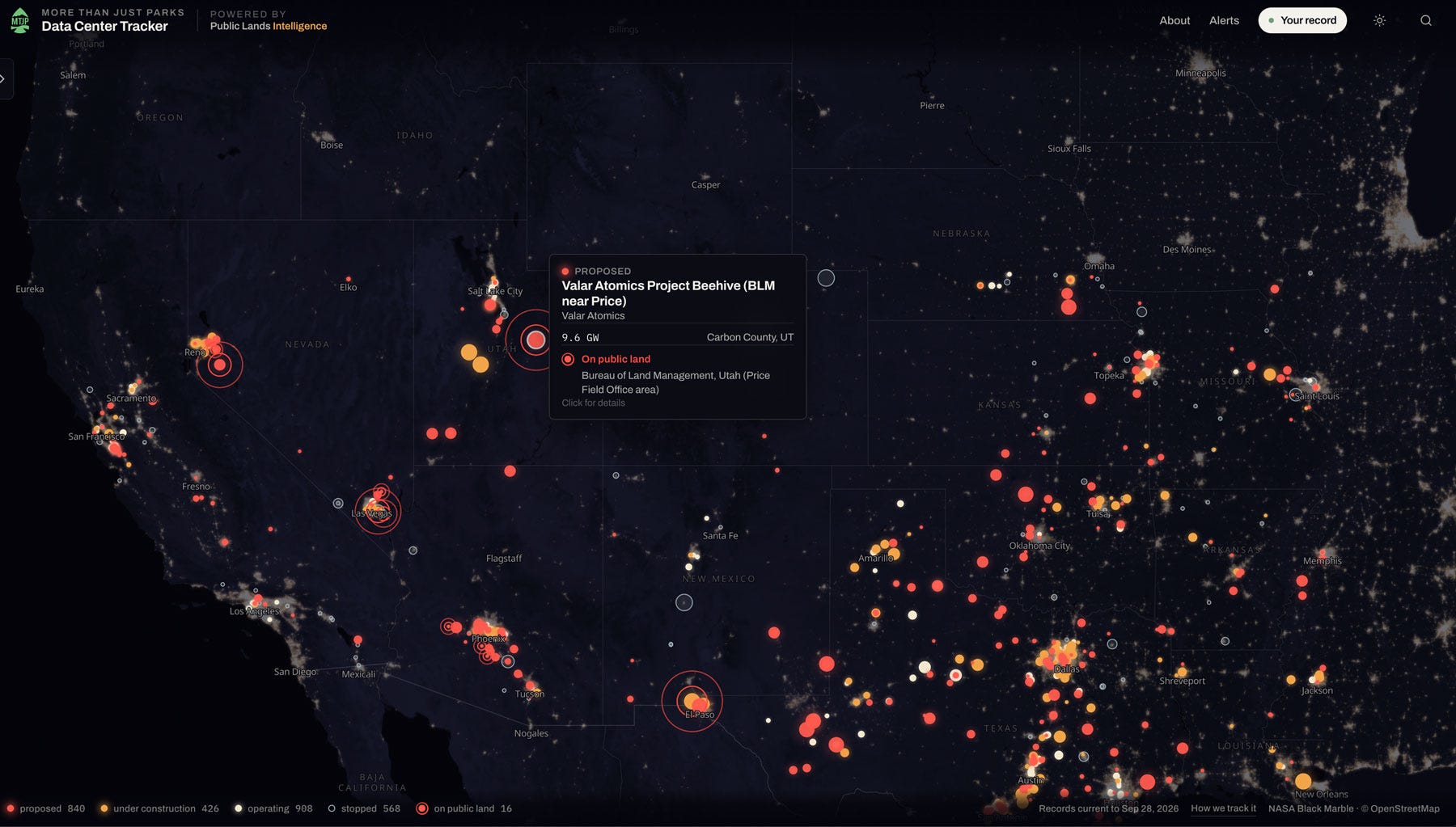
A More Than Just Parks interactive investigation. Open the live map and the full story here. A pregnant mule deer doe leaves the Red Desert in early March and starts walking north. She’ll walk one hundred and fifty miles before summer. She’ll cross close to two hundred fences. She’ll try to pass through six parcels of federal land this year that have been marked for destruction since last fall. Somebody, in an office in Washington, signed the paperwork. Somebody else knew the route she was walking and approved it anyway. Her great-grandmothers walked this path. Her granddaughters never will. S

02
Index of Mossy Rocks·Jun 22·hike

Sometimes I Hate Hiking

A reflective essay on the contradictory experience of disliking hiking while being committed to finishing a hike—exploring the mental and emotional reality of outdoor pursuits beyond the Instagram version.

Sometimes I hate hiking. That wave of dislike has an annoying tendency to hit when I’m at the furthest point from my car and there is no way to easily throw in the towel. I could give up and refuse to move any further, but then I would just be condemning myself to sitting in the (likely tick-laden) brush for eternity. Except in the most dire situations, if I walk into the woods, I have to walk myself out of them again—no matter how much I wish I could teleport to the nearest spot serving burgers and beer. Hating hiking is a different feeling than being in the midst of a Type 2 Fun adventure .

03
The Rush of it All·Jun 19·run

Wrestling the Bear

A trail runner confronts a cancer diagnosis instead of competing in a beloved 53-mile race, reframing the medical battle ahead through the metaphor of wrestling a bear—a deeply personal essay about resilience and redirection.

I was supposed to be headed north to the Catskills today for Manitou’s Revenge, my all-time favorite trail race: 53 miles on some of the most beautiful and rugged terrain in the world, with 15,000 feet of ascent (and my first race since Hardrock). Instead, I’m driving south to Baltimore to begin cancer treatment at Johns Hopkins Hospital. Rather than a 5th shot at the Manitou, it’s my turn to wrestle the bear. If you just flashed to that scene from The Revenant, that’s what I was going for, because that’s how I’m thinking of what’s ahead... wrestling the bear . And maybe I’ll look back later a

04
The Trek·Jun 17·hike

At Mile 500, the Desert Starts Letting Go

A lyrical essay on the psychological and physical trials of early-stage desert hiking, capturing the moment around mile 500 when the author begins trusting the process.

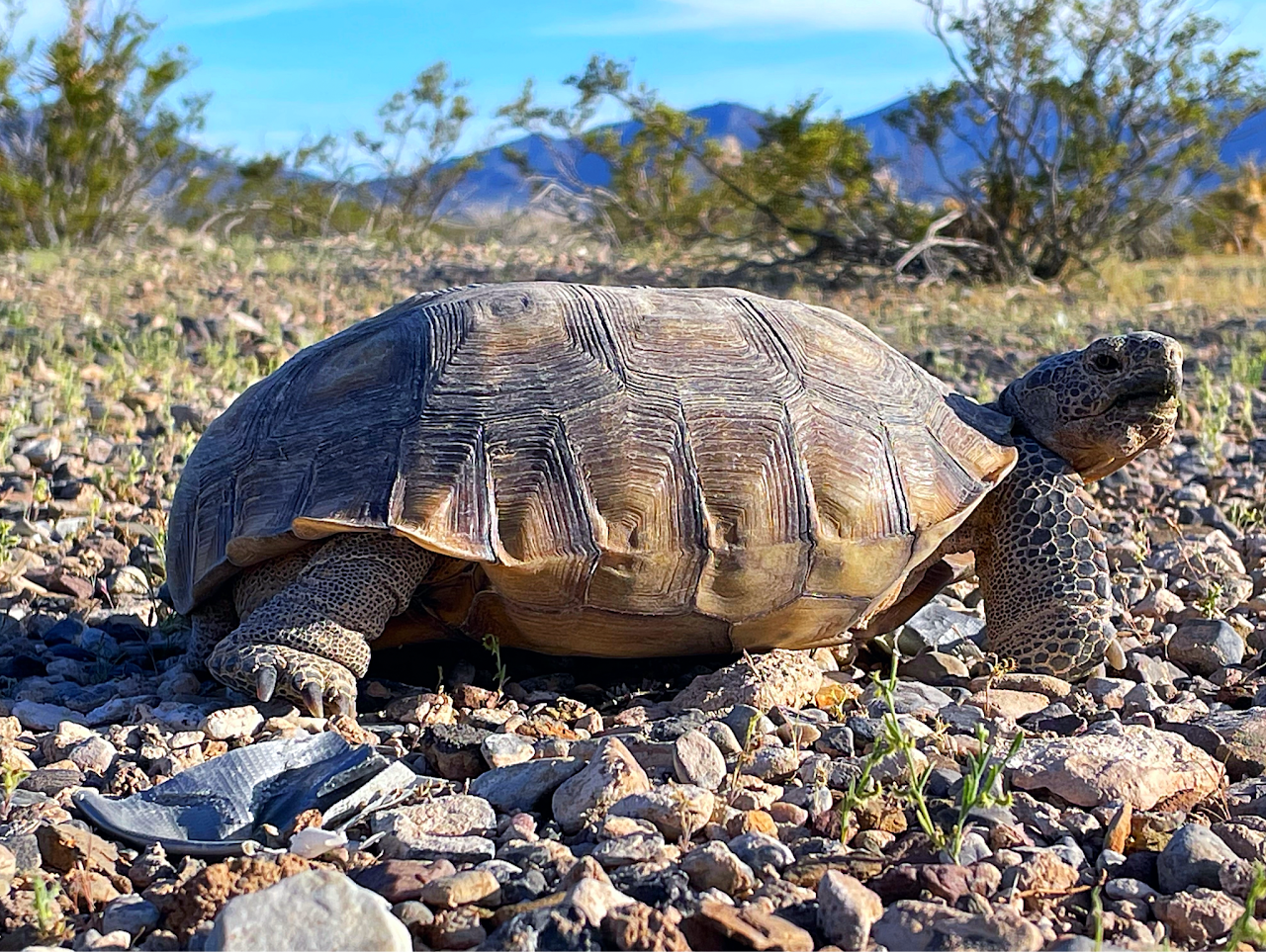
The desert has a way of testing you. Sometimes it does it through heat. Sometimes through long water carries, relentless wind, or miles that seem to stretch endlessly toward the horizon. Other times it does it more quietly, asking you to trust that what you need will show up when you need it. Somewhere between mile 400 and mile 500, I started believing that might actually be true. The Heat and the Water I woke up at Sulphur Springs to the sound of spotted towhees calling through the trees. ... The post At Mile 500, the Desert Starts Letting Go appeared first on The Trek .

05
Footnotes·Jun 20·run

Why Athletes Fall for Food Myths

A reported conversation about food myths in endurance sports and how outdoor media often individualizes systemic problems like sustainability rather than addressing them structurally. The piece connects climate science to lived experience across different athletic contexts.

I sat down with —co-host of Your Diet Sucks and a longtime fixture of outdoor and environmental journalism—for a conversation about food culture, politics, and endurance sport. We covered a lot of ground: What sport has to do with climate coverage — including how the same satellite data NOAA uses for climate research also forecasts NCAA baseball, and what sled dog racing in rural Alaska reveals about climate as a lived issue rather than an abstract one. The trouble with “sustainability” in running and outdoor media — why so much of it ends up individuating a systemic problem, and what that mea

06
The Bikepacking Journal·Jun 19·bike

Wheels Over Warlands: Bikepacking The Balkans

A feature story about a two-week bikepacking journey through the Balkans combining stunning landscapes with the region's complex history. Substantive travel narrative with multimedia elements (video, gallery) and reporting depth.

Last summer, Alan Danby, Britt Walker, and Ben Luckett connected for a two-week bikepacking journey across the Balkans. Their dynamic ride through the rugged region offered an up-close look at some of Europe’s most spectacular landscapes and a country still grappling with a painful recent past. Find a pair of videos, a brilliant gallery, and a story from their trip here... The post Wheels Over Warlands: Bikepacking The Balkans appeared first on BIKEPACKING.com .

07
Shangrilogs·Jun 17·general

Cabin Notes: get weirder and weirder

A personal cabin essay reflecting on depression, vulnerability, and the struggle to acknowledge difficult emotional realities as a path toward recovery.

I had to send a few emails I did not enjoy this week. All of them were a version of I’m sorry, or I can’t, or I am struggling. To get out of the hole, one must acknowledge the realities of being in the hole. Depression is new to me. I am used to the action-oriented woes of anxiety, but the apathy and nihilism of depression are bosses I am not used to fi… Read more

08
California Curated·Jun 17·hike

Mountain of Knives

Vivid narrative essay about accessing Lookout Mountain in the High Sierra via deteriorating roads, with evocative physical description and a sense of place-based discovery.

Obsidian pieces are everywhere across the summit of Lookout Mountain in the High Sierra. (Photo: Erik Olsen) The road to Lookout Mountain does not want you there. It peels off Highway 395 just south of Mono Lake as a washboard gravel track, climbs through sage and Jeffrey pine, and then simply stops pretending to be a road for cars. The last mile and a half is loose volcanic scree stacked into switchbacks, and my Honda Pilot, built for urban life and paved highways, did not like it. I almost bottomed out twice before I gave up trying to protect the oil pan and just committed. By the time I cre

09
Soundwalk·Jun 24·hike

Wildwood Trail, Part 9

Part 9 of an in-depth soundwalk series exploring the Wildwood Trail in Portland's Forest Park, focusing on the quiet northern section where the forest remains largely undisturbed and wildlife moves freely.

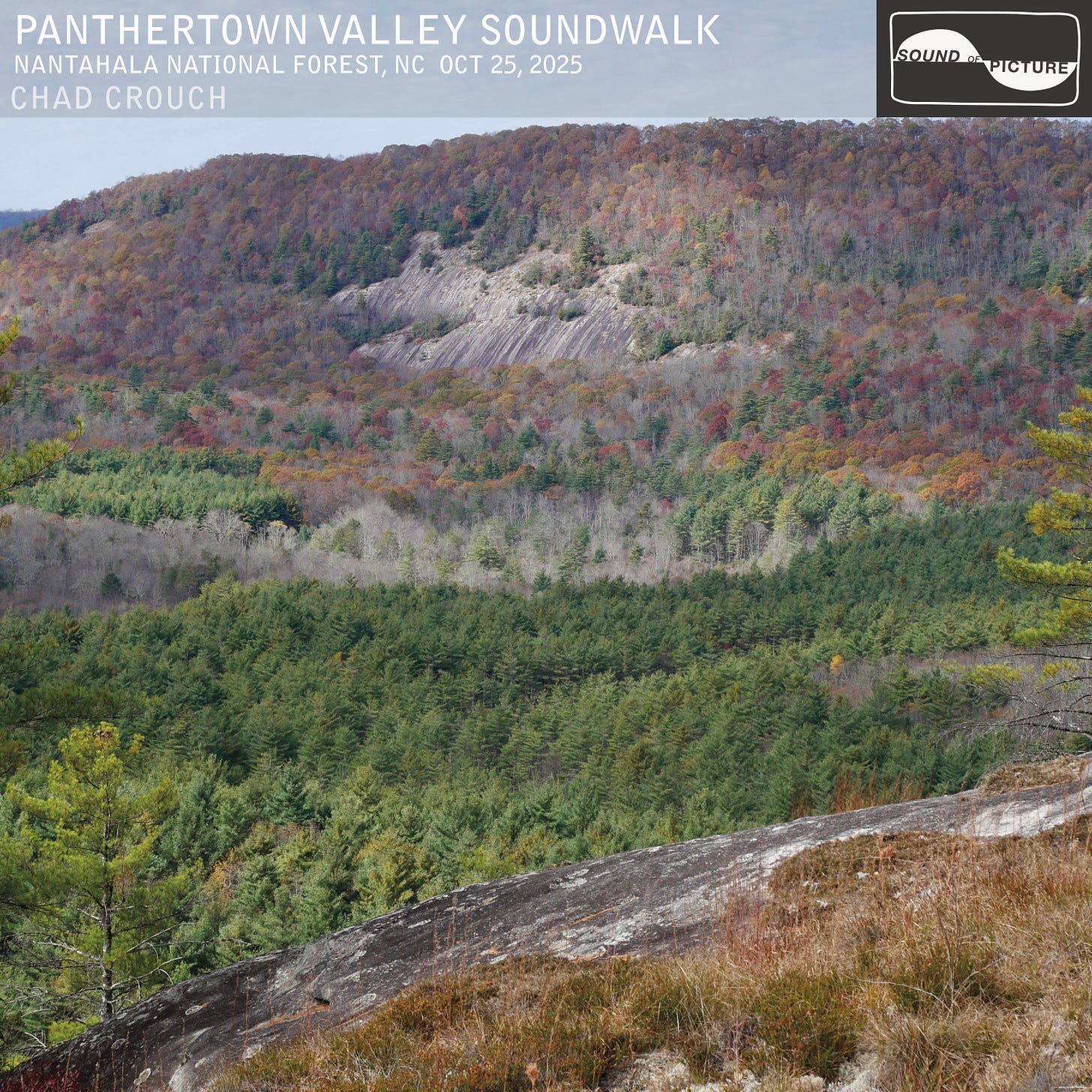
This is an in-depth 10-part soundwalk series on the 30-mile Wildwood Trail in Portland’s Forest Park. Parts 1 , 2 , 3 , 4 , 5 , 6 , 7 , & 8 span Washington Park trailhead north to Newberry Rd. Feel free to press play above for the environmental sound as we head to the end of the trail! The northern end of the Wildwood Trail is the quietest part of the park. The forest is tall and largely undisturbed, the trail well away from the roads and neighborhoods that press against the park’s southern and eastern edges. Wildlife moves through here in ways it doesn’t in the more trafficked miles to the so

10
Wes Siler's Newsletter·Jun 23·general

The Trouble With Pretending Subarus Can Go Off-Road

Wes Siler investigates Subaru's marketing strategy of promoting off-road capability in economy cars, revealing that the company exploits a federal emissions loophole to classify vehicles as light trucks rather than sedans.

As of the time I’m writing this, a helpful note I left on a neighbor’s windshield has accrued 389,000 views on Instagram and 267,000 on Threads . So I thought it might be useful to add some additional context. Here’s why it’s so problematic that Subaru pretends you can take its cars off-road, all wrapped up as simply and quickly as possible, so anyone can understand it. Why Do Subarus Exist? Subaru pretends its economy cars can go off-road in order to exploit an emissions loophole . Under federal law, any vehicle that either has a gross weight over 6,000 pounds or which is equipped with four-

11
Flylab·Jun 23·fish

Carp Are Difficult to Pattern

A thoughtful exploration of carp as a challenging game fish, drawing comparisons to permit and bonefish while explaining why guides pursue them seriously. The piece captures carp's unpredictable feeding patterns and growing reputation in fly fishing.

Some days, carp will feed like swine at the slop trough, plowing right over a flat, inhaling seemingly everything in their paths. On other days, they can be as fickle and spooky as permit. I can’t tell you how many trout and bonefish guides I’ve heard tell me how much they respect carp as difficult fish to fool. You can travel throughout the West, for example, and learn that when the guides go fishing on their time off at the end of the day, they’re often not casting at trout–they chase carp. Carp will eat just about anything, from crayfish to Cheetos. That’s a good news/bad news deal. The ang

12
RE:Public·Jun 23·conservation

The PACs for Public Lands

A co-published investigation into how a new Idaho-based political action committee is using public lands policy as a campaign tool in state-level elections, examining the intersection of conservation advocacy and partisan politics.

This story was co-published with Mountain Journal . A recent primary election race in Idaho between Republican candidates Stephanie Mickelsen and Kelly Golden wasn’t the sort of contest that shows up on CNN’s Magic Wall, but it yielded a vivid example of how conservation can be used as a political weapon these days. At a forum featuring both women in advance of the May 19 vote, Golden made a comment that drew fire from a new Idaho-based group called the PAC for Public Lands. The political action committee’s creators focus entirely on what state-level politicians say and do about the multi-face

13
Gripped·Jun 22·climb

Tobacco Road and an Historical Ascent of Mount Logan

A retrospective dive into a 1993 all-women's ascent of Mount Logan and the expedition account published in the Canadian Alpine Journal, exploring the historical significance of women climbers tackling Canada's highest peak.

In 1993, Sylvia Forest, Leanne Allison, Andrea Petzold and Mary Clayton became the first all-women team to climb Canada’s highest peak, Mount Logan. It took them 14 days to ascend and descend the East Ridge. Allison wrote a story about their experience called “Tobacco Road” in the 1994 Canadian Alpine Journal , which I recently sat down to read again. Allison begins her account by noting that the expedition’s origins echoed those of the 1977 women’s Mount Logan climb. “Apparently, the first women’s expedition to Mount Logan in 1977 was born over a beer in a bar,” Allison wrote. “Oddly enough,

14
Morgan Blair Outside·Jun 22·climb

Three Techniques for Dealing with Anxiety on Class 3 and 4 Climbs

Morgan Blair draws on personal experience with anxiety to offer three practical techniques for managing fear during technical climbing and mountaineering, grounded in her background as a rescue diver and mountain athlete.

I’m no stranger to anxiety. My whole family suffers from it. I get the pounding heart, racing thoughts, sweaty palms. I’ve done a lot of personal work to understand how to manage my anxiety in daily life, but when I started climbing more technical mountains, it needed a different approach. Suddenly, the stakes to manage these fears were very high. As I famously learned during my rescue diver course, “a panicked diver is the most dangerous.” I believe this applies to hiking too. A panicked hiker/climber rushes, freezes, or can’t think straight. You get lost in your emotions, which isn’t great w

15
Bikepacking.com·Jun 22·bike

Tracing the 2026 Tour Divide (Part 1): The Long Chase

Photographer Eddie Clark documents the 2026 Tour Divide bikepacking race across the mountain West, capturing landscapes, riders, and the human moments beyond the race tracker. Substantive field reporting with narrative voice and visual storytelling intent.

For the first installment of his annual Tour Divide field report, photographer Eddie Clark spent nine days leapfrogging the race across Montana, Wyoming, and beyond, chasing riders through hailstorms, wildlife refuges, moonlit basins, and remote mountain passes. In this piece, he catches up with race leader Victor Bosoni, Meaghan Hackinen, and Felix Laberge and shares his perspective on the landscapes, trail angels, and fleeting moments that rarely make it onto the Tracker… The post Tracing the 2026 Tour Divide (Part 1): The Long Chase appeared first on BIKEPACKING.com .

16
The Mountains are Calling·Jun 20·hike

Type 2 fun

A reflective piece on 'Type 2 fun'—the appeal of grueling outdoor experiences that become enjoyable only in retrospect—told through a vivid account of a challenging alpine hike with wet feet, unstable snow, and high-consequence decisions.

Type 2 fun: adventure that is miserable or physically grueling but becomes enjoyable and memorable in retrospect. We push on toward the upper lake. We have barely gone three miles in two hours. Our feet are wet from slushy snow and in Spicy Athlete's case, from being the third person to cross a questionable log and break through to water beneath. The switchbacks are also questionable, forcing us to kick in steps in unstable snow. High consequences. What drives us? That's something I ponder sometimes. We have all been to this lake many times. We could wait, forgo the chilly water crossings, the

17
Built on Bikes·Jun 19·bike

What Would It Actually Take to Bring WorldTour Racing Back to the United States?

A thoughtful examination of what would be required to revive WorldTour professional cycling racing in the United States, drawing on a year of reporting on cycling development to move beyond surface-level commentary.

I am finally taking on the beast of a topic that is road racing in the United States. For years the commentary has been that the discipline is nearly dead domestically. I don’t fully disagree, but I hate that so many people have accepted this fate without offering any solution for bringing this quintessential discipline back home. I have long avoided this topic because so many people have such strong opinions on it. In the early days of Built on Bikes it would have been easy to spew ideas on the subject. I am glad I held off. Nearly a year of writing about cycling development in the US has giv

18
Climbing Zine·Jun 19·climb

Fall on Rock by George Perkins

A first-person account of a climbing accident and rescue, written with immediate emotional intensity and practical clarity about the author's response to a partner's serious injury on rock.

I clipped her to the anchor, untied her knot, and pulled the rope through the gear. “I need more time.” Jessica whispered so weakly that I had to lean close to hear her. “We don’t have more time. We have to get help,” I replied. “What happened?” “You fell. You broke your arm and leg.” I didn’t tell her about her face. I wasn’t going to be able to do much if she had a serious head injury… Source